
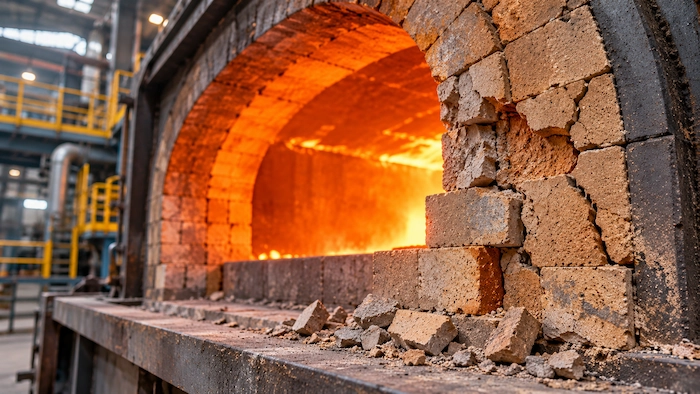
Refractory failure often begins with small warning signs, such as surface cracks, brick spalling, unusual discoloration, or rising temperatures on the outer shell of an industrial furnace. If these symptoms are ignored, they can develop into deeper lining damage, slag penetration, increased energy consumption, and unexpected production shutdowns. Recognizing the early signs of refractory deterioration allows plant managers and maintenance teams to plan inspections, repairs, or replacement before minor defects become major operational problems.
Why Is Early Detection of Refractory Failure Important?
Refractory materials are essential components of industrial furnaces and high-temperature equipment. They protect furnace structures against extreme heat, thermal shock, mechanical wear, chemical corrosion, and contact with molten materials or slag.
Over time, continuous exposure to operating conditions can gradually reduce the physical and chemical performance of refractory linings. Ignoring early warning signs may result in structural damage, product contamination, higher fuel consumption, costly repairs, and unplanned downtime.
Regular refractory inspections and accurate maintenance records help identify developing problems before they affect the entire production process. For a deeper understanding of the factors behind lining damage, read our guide to 7 Common Causes of Refractory Lining Failure and How to Prevent Them.
7 Common Warning Signs of Refractory Failure
1. Cracks on the Refractory Surface
Cracking is one of the most visible signs of potential refractory deterioration. Cracks may develop due to rapid temperature changes, repeated thermal expansion and contraction, mechanical stress, improper installation, or unsuitable material selection.
Not every crack indicates serious failure. Minor surface cracks may occur under certain operating conditions. However, deep, interconnected, or progressively widening cracks require closer investigation. For example, if cracks become longer or wider after repeated heating and cooling cycles, the lining may be experiencing more significant structural stress.
2. Surface Spalling and Layer Separation
Spalling occurs when pieces or layers of refractory material break away from the lining surface. This damage may result from thermal shock, chemical reactions, molten material penetration, or changes in the internal structure of the refractory.
Spalling reduces the effective lining thickness and exposes the underlying layers to higher temperatures and more aggressive operating conditions. Loose refractory fragments found inside the furnace or around the equipment may indicate that deterioration is progressing.
3. Refractory Wear and Lining Thickness Reduction
In furnaces where raw materials, powders, or solid products move continuously, mechanical abrasion can gradually wear down the refractory surface. Material flow, impact, friction, and movement of internal equipment are common contributors to this type of damage.
Thickness reduction is not always visible during routine operation. Periodic thickness measurements, wear mapping, and comparisons with previous inspection records can help identify affected areas. If one section wears faster than surrounding zones, the local operating conditions and material selection should be reviewed.
4. Slag and Molten Material Penetration
Slag penetration is a major concern in metallurgical and steelmaking furnaces. Slag composition, operating temperature, refractory porosity, and chemical reactions can all influence the rate of penetration and corrosion.
Unusual discoloration, reaction layers, changes in material density, or localized surface deterioration may indicate chemical interaction between the refractory and the process materials. However, confirming slag penetration may require laboratory analysis of refractory samples and a review of operating conditions.
Selecting refractory materials that are chemically compatible with the process slag is essential for reducing this type of damage. For steelmaking applications, explore our guide to Refractory Bricks for Steelmaking.
5. Unusual Temperature Increases on the Furnace Shell
An unexpected increase in the outer shell temperature of a furnace can indicate reduced lining performance. Refractory thickness loss, internal cracks, or deterioration of insulating layers may increase heat transfer toward the external structure.
Thermal imaging cameras can help identify abnormal hot spots across the furnace shell. For example, if one section consistently shows a higher temperature than comparable areas, the refractory lining and insulation system should be inspected.
However, shell temperature alone does not confirm refractory failure. Furnace loading, cooling systems, insulation condition, and operating parameters must also be considered.
6. Higher Energy Consumption and Reduced Thermal Efficiency
Refractory deterioration can increase heat loss and reduce furnace thermal efficiency. As insulation performance declines or the effective lining thickness decreases, the furnace may require more energy to maintain the required operating temperature.
If fuel or electricity consumption rises without a significant change in production volume, raw materials, or operating schedules, the refractory lining should be investigated. Comparing energy consumption across similar production periods and monitoring furnace temperatures can help identify possible performance losses.
7. Product Quality Problems and Process Contamination
In some industrial processes, refractory deterioration can introduce particles or unwanted compounds into the final product. This is particularly important in metal production, glass manufacturing, ceramics, and other applications where material purity is critical.
Unusual particles, changes in product composition, or increasing rejection rates may indicate a problem with the furnace lining. These symptoms can also have other causes, so quality-control results should be compared with furnace inspection records and maintenance history.
When Should a Refractory Lining Be Repaired or Replaced?
The decision to repair or replace refractory materials depends on the severity, depth, and location of the damage, as well as the operating requirements of the furnace.
Localized defects may sometimes be repaired using compatible refractory materials and an appropriate installation method. However, widespread cracking, significant thickness loss, extensive spalling, or severe chemical attack may require partial or complete lining replacement.
Before making a decision, evaluate the following factors:
- Depth and extent of cracks and spalled areas.
- Remaining refractory thickness compared with design requirements.
- Unusual furnace shell temperatures and localized hot spots.
- Evidence of slag penetration or chemical corrosion.
- Changes in energy consumption and product quality.
- Repair costs compared with replacement costs and potential downtime.
The refractory grade and repair method must also be suitable for the actual operating conditions. Explore our guide to Refractory Products: Types, Applications, and Buying Guide to learn more about available material forms and their uses.
How to Prevent Premature Refractory Failure
Preventing premature refractory deterioration starts with correct material selection and proper installation. Even high-quality refractory products may fail earlier than expected if they are installed incorrectly, dried improperly, or exposed to conditions beyond their design limits.
To improve refractory service life, industrial operators should establish regular inspection schedules, maintain furnace temperatures within the recommended operating range, and follow the manufacturer’s heating and drying procedures. Recording changes in shell temperature, energy consumption, and lining condition also makes it easier to identify developing problems.
Material selection should always consider actual operating temperature, slag chemistry, abrasion, thermal shock, and mechanical stress. For a more detailed selection process, read our guide to Choosing the Right Refractory Materials for Industrial Furnaces and our comparison of Magnesia vs. Alumina Refractories.
Technical Consultation and Refractory Supply from Azarshid Pars
Identifying the cause of refractory failure and selecting the right replacement material requires an understanding of furnace design, process conditions, chemical exposure, and refractory specifications. Choosing a product based only on its price or maximum temperature rating may increase maintenance costs and shorten lining service life.
Azarshid Pars supplies alumina-based and magnesia-based refractory materials and supports industrial buyers in selecting products according to their application requirements. To receive technical guidance and request a quotation, prepare information about your furnace type, operating temperature, application zone, observed damage, and required material quantity.
Contact Azarshid Pars for technical consultation and refractory material purchasing.
Phone: +98 913 251 9644
Conclusion
Cracking, spalling, lining thickness reduction, slag penetration, abnormal shell temperatures, increased energy consumption, and product quality problems are among the most important warning signs of potential refractory failure. Although these symptoms do not always identify the exact cause, they indicate when a detailed inspection may be necessary.
Regular monitoring, application-specific refractory selection, and timely repair or replacement can help reduce the risk of unexpected shutdowns and costly maintenance. If you need suitable refractory materials for your industrial furnace, contact Azarshid Pars for technical consultation and purchasing support.