
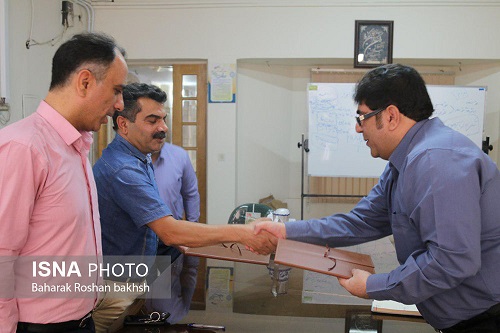
In line with its strategic approach to innovation and sustainable development, Faravardehhaye Nasooz Azarshid Pars Co. signed a cooperation agreement with Academic Center for Education, Culture and Research (ACECR) – Yazd Branch in 2018. This agreement aimed to strengthen collaboration between industry and academic institutions in the field of refractory materials and industrial ceramics.
Industry–academia cooperation is widely recognized as a key driver of technological advancement and productivity improvement in industrial sectors. By establishing this partnership, Azarshid Pars sought to leverage scientific expertise, applied research capabilities, and laboratory resources to enhance product quality and innovation.
The agreement laid the foundation for joint research and development projects, optimization of refractory formulations, and the design of advanced materials suitable for high-temperature industrial applications. Access to ACECR Yazd’s research infrastructure enabled more precise testing, analysis, and validation of refractory products.
Another important aspect of this cooperation was knowledge transfer and human resource development. Through collaborative projects and technical training programs, the partnership contributed to the education of skilled professionals and the integration of academic research outcomes into industrial practice.
The agreement also supported the commercialization of research results, helping bridge the gap between laboratory findings and market-ready products. This approach significantly enhances competitiveness and reduces reliance on imported refractory technologies.
The signing of this cooperation agreement reinforced Azarshid Pars’ position as a knowledge-oriented and innovation-driven company within Iran’s refractory industry. It represents a successful model of collaboration between industry and academia, contributing to technological self-sufficiency and long-term industrial growth.