
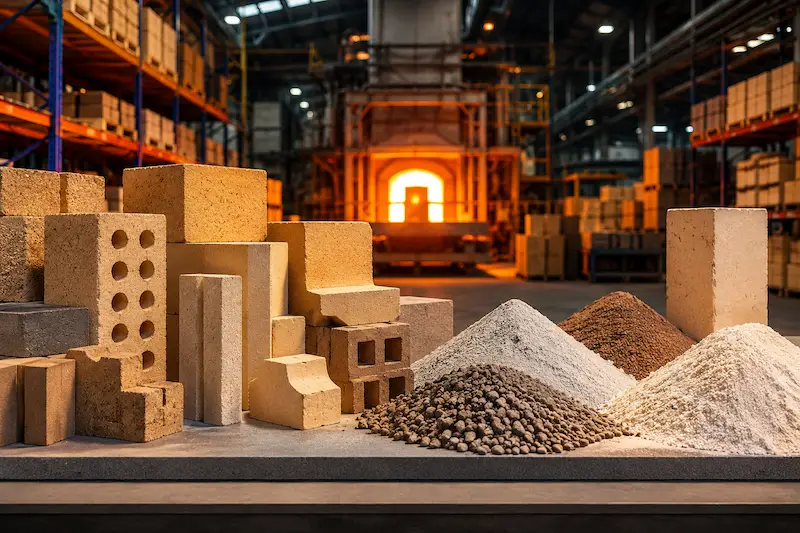
How to Choose a Reliable Alumina Refractory Supplier
If you are planning to purchase alumina refractory products, the most important decision is not choosing the cheapest product—it is choosing the right supplier. A reliable Alumina Refractory Supplier should provide consistent product quality, verified technical specifications, engineering support, and dependable after-sales service. Selecting the wrong supplier can lead to premature refractory failure, unexpected furnace shutdowns, higher energy consumption, and significant maintenance costs. In short, the quality of your supplier directly impacts the efficiency and profitability of your operation.
Refractory materials are among the most critical components in industries such as steel manufacturing, foundries, cement plants, petrochemical facilities, glass production, and non-ferrous metal processing. Since these materials operate under extremely high temperatures and aggressive environments, selecting an experienced and trustworthy supplier is just as important as selecting the refractory product itself.
Why Choosing the Right Alumina Refractory Supplier Matters
Many purchasing departments focus primarily on price when evaluating refractory products. While cost is certainly important, experienced engineers understand that the true cost of refractory materials extends far beyond the initial purchase price.
A low-quality refractory lining may require frequent replacement, increase energy losses, shorten furnace campaign life, and cause costly production interruptions. On the other hand, high-quality alumina refractories supplied by an experienced manufacturer can improve thermal efficiency, reduce maintenance frequency, and significantly lower total operating costs.
This is why leading industrial companies evaluate suppliers based on technical capability, manufacturing quality, product consistency, and engineering expertise—not simply on price.
Characteristic #1: Industry Experience and Technical Expertise
Experience is one of the strongest indicators of a reliable refractory supplier. Companies that have served industrial markets for many years understand the operational challenges faced by steel mills, foundries, cement producers, and other high-temperature industries.
An experienced supplier can recommend products based on operating temperature, thermal cycling conditions, slag chemistry, mechanical loads, and production requirements instead of offering generic solutions.
Signs of an Experienced Supplier
- Extensive experience serving multiple industries
- Wide portfolio of alumina and silica refractory products
- Qualified technical engineers
- Application-specific product recommendations
- Documented industrial references and successful projects
For example, a steel plant operating a ladle furnace requires refractory materials with completely different properties compared to a rotary kiln in the cement industry. A knowledgeable supplier understands these differences and recommends products accordingly.
Characteristic #2: Consistent Product Quality
Consistency is one of the most overlooked aspects of refractory purchasing. Even small variations in raw materials or manufacturing processes can significantly affect furnace performance.
Reliable suppliers maintain strict production controls to ensure every production batch meets the same technical specifications.
Important Technical Properties to Evaluate
- Al₂O₃ (Alumina) Content
- Bulk Density
- Apparent Porosity
- Cold Crushing Strength (CCS)
- Thermal Shock Resistance
- Slag Resistance
- Maximum Service Temperature
Professional suppliers provide complete technical data sheets that allow engineers to compare products objectively and make informed purchasing decisions.
Characteristic #3: Engineering Consultation Before Purchase
Every industrial furnace operates under unique conditions. The ideal refractory solution for one application may perform poorly in another.
Rather than recommending products solely from a catalog, reputable suppliers first evaluate the customer’s operating conditions, including furnace design, operating temperature, heating cycles, atmosphere, chemical exposure, and production objectives.
This engineering-based approach helps customers maximize refractory life while minimizing maintenance costs and production downtime.
Characteristic #4: Comprehensive Product Portfolio
A reliable Alumina Refractory Supplier should be capable of meeting a wide range of industrial requirements through a complete portfolio of refractory products.
Instead of sourcing products from multiple vendors, industrial customers benefit from working with one supplier capable of delivering integrated refractory solutions.
Typical Product Range Includes
- High Alumina Bricks
- Castable Refractories
- Dry Ramming Mass
- Insulating Refractories
- Refractory Mortars
- Monolithic Refractory Products
Azarshid Pars Refractory Products supplies a broad range of alumina-based and silica-based refractory materials designed for steelmaking, foundries, cement production, petrochemical plants, and other high-temperature industries. By combining manufacturing expertise with technical consultation, the company helps customers select the most appropriate refractory solution for their specific operating conditions.
Characteristic #5: Strict Quality Control and Manufacturing Standards
One of the defining characteristics of a reliable Alumina Refractory Supplier is a comprehensive quality management system. High-performance refractory materials must maintain consistent physical and chemical properties throughout every production batch.
Industrial customers cannot afford unpredictable product quality. Even small variations in alumina content, density, or porosity can shorten furnace campaign life and increase maintenance costs.
Professional manufacturers implement quality control procedures from raw material inspection through final product testing, ensuring every shipment meets established technical specifications.
Key Quality Tests
- Chemical composition analysis (Al₂O₃ content)
- Bulk density measurement
- Apparent porosity testing
- Cold Crushing Strength (CCS)
- Permanent Linear Change (PLC)
- Thermal shock resistance
- Slag and corrosion resistance
- Dimensional accuracy inspection
Requesting technical data sheets before purchasing is one of the simplest ways to evaluate whether a supplier operates with professional manufacturing standards.
Characteristic #6: Application-Based Product Selection
No refractory product is universally suitable for every furnace. A reliable supplier understands that refractory selection depends on operating conditions rather than simply product availability.
Factors influencing product selection include:
- Operating temperature
- Heating and cooling cycles
- Chemical attack from slag
- Mechanical abrasion
- Production process
- Expected service life
For example, the refractory requirements of an induction furnace differ considerably from those of a rotary kiln or a steel ladle. A technically experienced supplier evaluates these conditions before recommending an appropriate solution.
Characteristic #7: Reliable Manufacturing Capacity
Production interruptions caused by delayed refractory deliveries can result in significant financial losses. Therefore, manufacturing capacity is another important factor when selecting an Alumina Refractory Supplier.
A dependable manufacturer should be capable of supplying both routine orders and emergency requirements without compromising product quality or delivery schedules.
Benefits of Strong Manufacturing Capacity
- Stable product availability
- Reduced supply chain risks
- Shorter delivery times
- Consistent product quality
- Support for large industrial projects
Characteristic #8: Technical Support and After-Sales Service
Purchasing refractory materials is only the beginning of a long-term partnership. Installation methods, drying procedures, heating schedules, and operational practices all influence refractory performance.
A professional supplier provides technical assistance before, during, and after installation to help customers achieve maximum refractory life.
Examples of Technical Services
- Product selection consultation
- Installation recommendations
- Dry-out and commissioning guidance
- Failure analysis
- Performance optimization
- Maintenance recommendations
These services help reduce operational risks while improving furnace reliability.
Manufacturer vs. Distributor: Which Should You Choose?
Industrial buyers often ask whether they should purchase directly from a manufacturer or through a distributor.
Although distributors can provide convenient access to products, purchasing directly from an experienced refractory manufacturer often offers significant advantages.
Advantages of Buying Directly from the Manufacturer
- Authentic products with verified specifications
- Direct access to technical experts
- Competitive pricing
- Customized refractory solutions
- Better communication during technical projects
- Improved long-term support
Direct communication with manufacturing engineers allows industrial customers to solve technical challenges more efficiently and select products specifically designed for their operating conditions.
Common Mistakes When Selecting an Alumina Refractory Supplier
Many companies unintentionally increase operating costs by making purchasing decisions based solely on initial price.
Common Purchasing Mistakes
- Selecting the lowest-priced product without technical evaluation.
- Ignoring technical data sheets.
- Choosing suppliers with limited industrial experience.
- Overlooking after-sales technical support.
- Using identical refractory materials for different furnace applications.
For instance, installing standard refractory bricks in an application requiring high thermal shock resistance may result in premature cracking, frequent shutdowns, and costly repairs.
Supplier Evaluation Checklist
Before placing an order, purchasing managers should evaluate potential suppliers using a structured checklist.
- Does the supplier provide detailed technical data sheets?
- Do they have experience in your industry?
- Can they recommend products based on operating conditions?
- Do they perform laboratory quality testing?
- Can they guarantee consistent product quality?
- Do they offer engineering consultation?
- Is after-sales technical support available?
- Can they meet your delivery schedule?
A supplier capable of answering these questions confidently and providing supporting documentation is far more likely to become a reliable long-term business partner.
How the Right Alumina Refractory Supplier Reduces Long-Term Costs
Many companies evaluate refractory products based solely on their purchase price. However, experienced plant managers understand that the true cost of refractory materials is measured over their entire service life rather than at the time of purchase.
High-quality alumina refractories generally deliver longer service life, improved thermal efficiency, fewer shutdowns, and lower maintenance costs. While premium products may require a higher initial investment, they often generate substantial savings through increased productivity and reduced downtime.
For example, if a low-quality refractory lining fails several months earlier than expected, the resulting production stoppage, labor expenses, energy losses, and replacement costs can far exceed the difference in material price. This is why successful industrial facilities focus on lifecycle value rather than initial cost.
Why Choose Azarshid Pars Refractory Products?
Azarshid Pars Refractory Products specializes in manufacturing and supplying high-performance alumina-based and silica-based refractory materials for demanding industrial applications.
Serving industries such as steelmaking, foundries, cement production, petrochemical processing, and thermal engineering, the company combines manufacturing expertise with technical consultation to help customers improve furnace reliability and operational efficiency.
Rather than simply supplying refractory products, Azarshid Pars works closely with customers to understand operating conditions and recommend solutions that maximize furnace performance while minimizing maintenance requirements.
Advantages of Working with Azarshid Pars
- Manufacturing of premium alumina and silica refractory products
- Application-specific engineering consultation
- Consistent product quality through strict quality control
- Reliable production capacity and timely delivery
- Technical support before and after purchase
- Solutions designed to increase furnace campaign life
Quick Checklist for Selecting an Alumina Refractory Supplier
Before making your final purchasing decision, evaluate your supplier using the following checklist:
- ✔ Proven experience in refractory manufacturing
- ✔ Complete technical documentation and product data sheets
- ✔ Stable and consistent product quality
- ✔ Modern production facilities
- ✔ Industry-specific technical expertise
- ✔ Engineering consultation before purchase
- ✔ Reliable after-sales support
- ✔ Ability to meet delivery schedules
- ✔ Positive industrial references
- ✔ Long-term partnership approach
Conclusion
Selecting the right Alumina Refractory Supplier is a strategic decision that directly affects furnace performance, equipment reliability, operating costs, and production efficiency. While price is an important consideration, factors such as manufacturing quality, engineering expertise, technical support, and product consistency should always play a greater role in supplier selection.
Industrial companies that invest in high-quality refractory solutions often experience longer furnace service life, reduced maintenance frequency, lower energy consumption, and improved overall productivity. These long-term benefits far outweigh any short-term savings gained from purchasing lower-quality materials.
By partnering with an experienced refractory manufacturer, companies can ensure that every refractory solution is optimized for their specific operating conditions, helping maximize both equipment performance and return on investment.
Contact Azarshid Pars for Expert Consultation
If you are looking for a trusted Alumina Refractory Supplier, the engineering team at Azarshid Pars Refractory Products is ready to assist you.
Whether you require high alumina bricks, castable refractories, dry ramming mass, silica refractories, or customized refractory solutions, our specialists can recommend the most suitable products for your application.
Contact us today for professional consultation, product recommendations, pricing information, and purchasing assistance.
📞 +98 913 251 9644
Frequently Asked Questions (FAQ)
1. What should I look for in an Alumina Refractory Supplier?
Look for proven manufacturing experience, consistent product quality, technical documentation, engineering consultation, after-sales support, and reliable production capacity.
2. Why is product quality more important than price?
Higher-quality refractory materials typically last longer, improve thermal efficiency, reduce maintenance costs, and minimize unplanned production shutdowns, resulting in lower overall operating costs.
3. Is it better to buy directly from a refractory manufacturer?
Yes. Purchasing directly from the manufacturer often provides better technical support, verified product quality, competitive pricing, and customized solutions for specific industrial applications.
4. Which industries use alumina refractory products?
Alumina refractories are widely used in steel plants, foundries, cement factories, petrochemical facilities, glass manufacturing, power generation, and other high-temperature industrial processes.
5. Can Azarshid Pars help select the right refractory solution?
Yes. Azarshid Pars provides engineering consultation to evaluate furnace operating conditions and recommend the most suitable refractory products for improved performance and longer service life.