
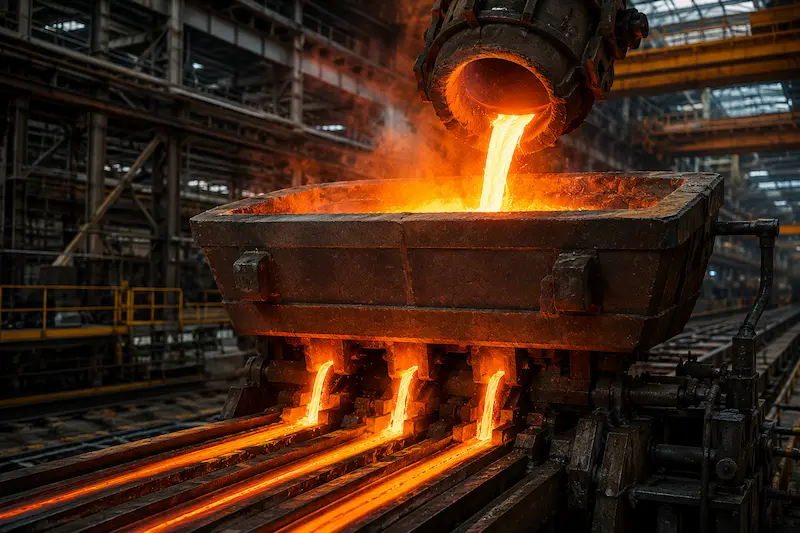
Steelmaking Tundish: Functions, Types, Refractory Materials and Importance in Continuous Casting
The steelmaking tundish is one of the most essential components in modern continuous casting operations. Positioned between the ladle and the casting mold, the tundish acts as an intermediate vessel that controls molten steel flow, improves steel cleanliness, and enhances production efficiency. As steel manufacturers strive for higher quality products and improved operational performance, the tundish has become a critical element in the steelmaking process.
Beyond simply transferring molten steel, a tundish performs several metallurgical and operational functions that directly affect the quality of the final steel products. Proper tundish design and the use of high-performance refractory materials can significantly improve casting efficiency while reducing production costs.
What is a Steelmaking Tundish?
A tundish is a refractory-lined vessel located between the ladle and the continuous casting mold. Molten steel is transferred from the ladle into the tundish and then distributed to one or more molds in a controlled manner. The tundish serves as a buffer during ladle changes and ensures a stable and uninterrupted casting process.
In modern steel plants, tundishes are engineered to optimize steel flow patterns, minimize turbulence, reduce contamination, and improve the overall cleanliness of molten steel before it enters the casting molds.
Importance of the Tundish in Steelmaking
The tundish plays a crucial role in achieving consistent steel quality and maximizing productivity. Without a properly functioning tundish, defects such as inclusions, temperature variations, and flow instability can negatively impact the final product.
The major benefits of using an advanced tundish system include:
- Improved steel cleanliness.
- Better flow control.
- Enhanced temperature stability.
- Reduction of non-metallic inclusions.
- Higher casting productivity.
- Lower operational downtime.
- Improved surface quality of steel products.
Main Functions of a Tundish
Molten Steel Distribution
One of the primary functions of a tundish is distributing molten steel evenly to multiple casting strands. This ensures consistent production rates and uniform product quality.
Flow Control
Flow-control devices such as dams, weirs, and impact pads help regulate molten steel movement inside the tundish. Proper flow control minimizes turbulence and improves casting stability.
Inclusion Removal
The tundish provides sufficient residence time for non-metallic inclusions to float to the slag layer. This process significantly enhances steel cleanliness and reduces defects.
Temperature Stabilization
Maintaining a stable temperature throughout the casting process is essential. The tundish helps reduce thermal fluctuations and ensures consistent molten steel conditions.
Continuous Operation
During ladle exchanges, the tundish acts as a reservoir, allowing continuous casting operations to continue without interruption.
Components of a Steelmaking Tundish
A typical tundish consists of several important components:
- Steel shell structure
- Permanent refractory lining
- Working refractory lining
- Insulation layer
- Impact pad
- Dams and weirs
- Flow-control devices
- Stopper rods
- Submerged entry nozzles
- Tundish covering compounds
Each component contributes to improving steel quality, reducing heat loss, and increasing operational efficiency.
Types of Steelmaking Tundishes
Single-Strand Tundish
Single-strand tundishes are designed to supply molten steel to one casting mold and are commonly used in smaller production facilities.
Multi-Strand Tundish
Large steel plants frequently use multi-strand tundishes capable of feeding multiple molds simultaneously. These systems improve productivity and reduce production costs.
Heated Tundish Systems
Advanced tundish systems may incorporate heating technology to compensate for thermal losses and maintain optimal casting temperatures.
Refractory Materials Used in Tundishes
The performance and service life of a tundish largely depend on the quality of its refractory lining. Tundish refractories must withstand extreme temperatures, thermal shock, chemical attack, and mechanical wear.
Common refractory materials used in tundish applications include:
- Magnesia-based refractories
- Alumina-based refractories
- Magnesia-spinel refractories
- Dry vibration masses
- Castable refractories
- Insulating boards
- Precast refractory shapes
- Specialized tundish nozzles
Selecting high-quality refractory products can extend tundish campaign life, improve safety, and reduce maintenance costs.
Challenges in Tundish Operations
Steel manufacturers face several challenges during tundish operation:
- Refractory wear and erosion.
- Thermal shock damage.
- Steel reoxidation.
- Nozzle clogging.
- Heat loss.
- Slag entrainment.
- Chemical corrosion.
Addressing these issues requires proper tundish design, optimized operating practices, and reliable refractory materials.
Role of Refractory Products in Tundish Performance
Refractory materials are fundamental to the efficiency and longevity of tundish systems. High-performance refractories offer excellent resistance to thermal shock, chemical attack, and mechanical stress while providing superior insulation properties.
Benefits of premium refractory solutions include:
- Longer service life.
- Reduced maintenance requirements.
- Lower production costs.
- Improved steel quality.
- Enhanced process safety.
- Higher operational efficiency.
Azarshid Pars Refractory Products for the Steel Industry
Azarshid Pars Refractory Products specializes in manufacturing high-quality refractory solutions for steelmaking, foundry, and metallurgical industries. The company offers a comprehensive range of refractory products designed to meet the demanding requirements of tundish applications and other high-temperature processes.
Using premium raw materials and advanced production technologies, Azarshid Pars provides refractory products with outstanding durability, thermal stability, and chemical resistance. These characteristics help steel producers increase productivity and reduce operational costs.
For expert consultation, product selection assistance, and purchasing information, contact Azarshid Pars at:
Phone: 09132519644
Future Developments in Tundish Technology
The steel industry continues to invest in innovative tundish technologies. Computational Fluid Dynamics (CFD), automated temperature monitoring systems, advanced flow-control devices, and next-generation refractory materials are transforming tundish performance.
These advancements contribute to improved steel cleanliness, greater productivity, lower energy consumption, and enhanced sustainability in steel manufacturing.
Conclusion
The steelmaking tundish is a critical component in continuous casting operations. It performs multiple functions, including molten steel distribution, inclusion removal, flow control, and temperature stabilization. The quality of refractory materials used within the tundish directly impacts steel quality, operational efficiency, and maintenance costs.
By selecting premium refractory solutions from Azarshid Pars Refractory Products, steel manufacturers can improve casting performance, reduce downtime, and achieve superior production results. As the steel industry evolves, reliable tundish systems and advanced refractory technologies will remain essential for sustainable and efficient steel production.