
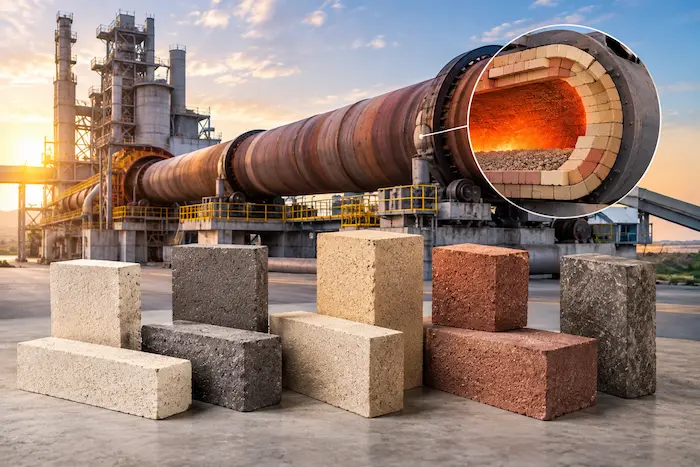
If you are selecting refractory bricks for a cement kiln, there is no single brick that can be considered the best choice for every section of the kiln. The right refractory depends on the kiln zone, operating temperature, thermal cycling, clinker chemistry, abrasion, alkali attack, coating conditions, and mechanical stresses. Magnesia-spinel, magnesia-chrome, high alumina, and dolomite-based bricks each have different performance characteristics and should be selected according to the actual operating conditions of the kiln.
Why Is Refractory Brick Selection Important in Cement Kilns?
A cement rotary kiln operates under a combination of high temperature, chemical attack, abrasion, thermal shock, and continuous mechanical movement. The refractory lining must protect the steel shell while maintaining thermal efficiency and providing a stable working surface for clinker production.
A refractory brick that performs well in the burning zone may not be the most suitable option for the preheating or calcination zones. This is why refractory selection should be based on kiln zone and operating conditions rather than simply choosing a brick with the highest temperature rating.
Modern cement kiln refractory systems commonly combine different refractory families throughout the kiln. Industrial refractory suppliers also offer different solutions for burning, transition, calcination, preheating, outlet, and cooler areas.
Main Types of Refractory Bricks Used in Cement Kilns
1. Magnesia-Spinel Bricks
Magnesia-spinel bricks are widely used in demanding areas of modern cement rotary kilns, particularly in the burning and transition zones.
These bricks are based primarily on magnesia with spinel phases and are designed to withstand high temperatures, thermal cycling, chemical interaction with clinker, and mechanical stress.
One of their important advantages is their ability to tolerate thermal fluctuations while maintaining good structural stability. They are therefore frequently considered when the kiln requires a combination of thermal shock resistance and resistance to the aggressive conditions of the burning zone.
2. Magnesia-Chrome Bricks
Magnesia-chrome bricks have historically been used in high-temperature cement kiln applications because of their resistance to high temperatures and chemical attack.
However, their use requires careful consideration because chromium-containing refractory materials can create environmental and disposal concerns. For this reason, magnesia-spinel and other chrome-free alternatives are widely used in many modern cement kiln applications.
The appropriate choice should depend on the kiln design, operating conditions, regulatory requirements, and the technical specifications of the refractory lining.
3. High Alumina Bricks
High alumina refractory bricks are manufactured with a high proportion of alumina and are valued for their refractoriness, strength, thermal stability, and abrasion resistance.
They can be suitable for areas where abrasion, alkali exposure, mechanical wear, or specific thermal conditions are more important than the extreme chemical environment of the burning zone.
High alumina bricks are also used in various sections around rotary kiln systems and other cement plant equipment. Their exact application should be determined based on the required alumina content, porosity, mechanical strength, abrasion resistance, and chemical conditions.
Alumina Refractory Products
4. Dolomite-Based Refractory Bricks
Dolomite refractory bricks are another option for high-temperature cement applications. Their basic chemical nature can make them suitable for specific zones where interaction with cement clinker and the formation of a protective coating are important considerations.
However, dolomite refractories can be sensitive to moisture and storage conditions. Proper handling, installation, and drying are therefore essential to prevent performance problems.
Comparison of Refractory Bricks for Cement Kilns
| Refractory Type | Main Strength | Typical Application | Important Consideration |
|---|---|---|---|
| Magnesia-Spinel | Thermal shock and chemical resistance | Burning and transition zones | Requires correct grade and installation |
| Magnesia-Chrome | High-temperature and chemical resistance | Specific high-temperature applications | Chromium-related environmental considerations |
| High Alumina | Strength and abrasion resistance | Selected kiln and auxiliary zones | Grade must match chemical and mechanical conditions |
| Dolomite | Basic chemical resistance and coating compatibility | Specific high-temperature kiln zones | Moisture sensitivity and proper handling |
Which Refractory Brick Is Better for Each Cement Kiln Zone?
Burning Zone
The burning zone is one of the most demanding areas of a cement rotary kiln. The refractory lining is exposed to high temperature, clinker, thermal cycling, chemical reactions, and mechanical stress.
Magnesia-spinel bricks are commonly considered for this zone because of their combination of thermal shock resistance, high-temperature performance, and compatibility with the cement kiln environment. Depending on the process and design, other basic refractory solutions may also be considered.
Transition Zones
Transition zones experience changing thermal and mechanical conditions. Refractory selection should therefore consider thermal fluctuations, coating stability, abrasion, and chemical attack.
Magnesia-spinel and selected high-alumina or alumina-based solutions can be used depending on the exact location and operating conditions. Industrial refractory portfolios commonly specify different products for lower transition and other kiln sections rather than applying one universal brick throughout the kiln.
Calcination and Preheating Zones
In the calcination and preheating sections, resistance to alkalis, abrasion, thermal conditions, and process gases becomes particularly important.
High alumina and specially designed alkali-resistant refractory products may be considered depending on the kiln design and fuel/raw-material chemistry. The correct selection should be based on actual operating data rather than temperature alone.
Kiln Outlet and Cooler Areas
The outlet and cooler sections can experience significant abrasion, thermal shock, mechanical impact, and rapid temperature fluctuations. In these areas, refractory selection may involve high-alumina bricks, abrasion-resistant materials, castables, or precast solutions depending on the specific component.
For example, the kiln hood and nose ring require materials that can tolerate rapid temperature changes and mechanical stresses, and refractory suppliers may use monolithic or precast solutions in addition to traditional bricks.
So, Which Is the Best Refractory Brick for a Cement Kiln?
The best refractory brick is not necessarily the one with the highest refractoriness or the highest price. It is the product that provides the right combination of chemical resistance, thermal shock resistance, mechanical strength, abrasion resistance, coating compatibility, and service life for the specific kiln zone.
For many modern rotary kiln burning-zone applications, magnesia-spinel is an important refractory option. High alumina products can be valuable in zones where abrasion, alkali exposure, and mechanical strength are major concerns. Other materials, including dolomite or specialized basic bricks, may be appropriate when the process conditions justify their use.
What Should You Check Before Buying Cement Kiln Refractory Bricks?
Before purchasing refractory bricks for a cement plant, technical and procurement teams should review more than the product name. At minimum, evaluate:
- Exact kiln zone and installation location
- Operating and peak temperatures
- Raw material and clinker chemistry
- Alkali, sulfur, and chlorine levels
- Fuel type and alternative fuel usage
- Thermal cycling and shutdown frequency
- Abrasion and mechanical wear conditions
- Required brick dimensions and kiln geometry
- Bulk density and apparent porosity
- Cold crushing strength and thermal shock resistance
- Previous refractory failure patterns
- Expected campaign life and maintenance schedule
This information allows the refractory supplier to recommend a product based on the actual operating environment instead of making a generic recommendation.
Best Refractory Bricks for Steelmaking | A Specialized Selection Guide
A Common Mistake When Selecting Cement Kiln Refractories
One of the most common mistakes is selecting refractory bricks based only on maximum service temperature.
For example, two bricks may both have a suitable temperature rating, but their resistance to thermal shock, abrasion, alkali attack, clinker interaction, or mechanical stress can be significantly different.
In a cement rotary kiln, long refractory life depends on the interaction between the brick, process conditions, coating, installation quality, kiln operation, and maintenance. Therefore, a technically suitable refractory design is usually more important than simply choosing a higher-rated material.
Choose the Right Refractory for Your Cement Kiln
If you are looking for a reliable cement kiln refractory supplier, the first step should be identifying the operating conditions of your kiln and the exact zone where the refractory will be installed.
Azarshid Pars Refractory Products can help you evaluate the appropriate refractory solution based on the application, kiln conditions, required properties, and procurement requirements.
Need Technical Advice Before Buying?
Contact Azarshid Pars for technical consultation and purchasing assistance for refractory materials used in cement plants and industrial furnaces.
Phone: +98 913 251 9644
CTA: Consultation and Purchase from Azarshid Pars
Conclusion
Choosing the right refractory brick for a cement kiln requires a zone-by-zone approach. Magnesia-spinel, magnesia-chrome, high alumina, and dolomite bricks each have specific advantages and limitations. The correct choice depends on temperature, chemical attack, thermal shock, abrasion, clinker coating, mechanical stress, and the actual operating conditions of the kiln.
Instead of asking only “Which refractory brick is the best?”, a more useful technical question is: “Which refractory material is best suited to this specific kiln zone and operating condition?” This approach can help improve refractory service life, reduce unexpected shutdowns, and support more reliable cement kiln operation.