
Best Refractory Brick for Steelmaking: A Complete Buyer’s Guide
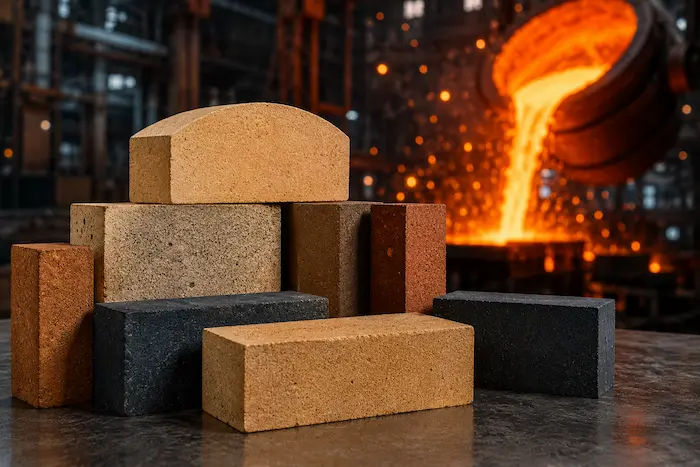
If you’re looking for the best refractory brick for steelmaking, the short answer is this: there is no single refractory brick that is ideal for every steel furnace. The best choice depends on your furnace type, operating temperature, slag chemistry, thermal cycling, and production process. In modern steel plants, High Alumina Refractory Bricks, Magnesia Bricks, and Magnesia-Carbon (MgO-C) Bricks are among the most widely used solutions because of their exceptional resistance to extreme temperatures, molten metal, and aggressive slags.
In steel production, refractory materials are not simply construction components—they directly influence furnace reliability, energy efficiency, maintenance costs, and overall productivity. Choosing an unsuitable refractory brick can result in premature lining failure, excessive heat loss, frequent shutdowns, and significant financial losses.
This guide explains how to select the best refractory brick for steelmaking, compares the major refractory brick types, highlights the most important purchasing criteria, and provides practical recommendations for industrial buyers seeking long-term furnace performance.
Why Is Refractory Brick Selection So Important in Steelmaking?
Steelmaking furnaces operate under some of the harshest industrial conditions. Extremely high temperatures, molten steel, corrosive slags, thermal shock, and mechanical stress constantly challenge the refractory lining.
A high-quality refractory brick protects the furnace shell while maintaining structural integrity throughout repeated production cycles. Poor refractory selection, however, often leads to rapid wear, cracking, slag penetration, and costly emergency maintenance.
Benefits of Choosing the Right Refractory Brick
- Longer furnace campaign life
- Lower maintenance costs
- Reduced production downtime
- Improved thermal efficiency
- Lower energy consumption
- Higher steel quality
- Improved operational safety
What Makes a Good Refractory Brick for Steelmaking?
The ideal refractory brick must perform under extreme thermal, chemical, and mechanical conditions simultaneously. Heat resistance alone is not sufficient. Modern steel plants require refractory materials that remain dimensionally stable while resisting slag attack and thermal cycling.
Key Technical Properties
- High refractoriness at elevated temperatures
- Excellent thermal shock resistance
- Strong mechanical strength under load
- Superior resistance to slag corrosion
- Excellent abrasion resistance
- Low thermal expansion
- Long operational service life
The selection process should always consider the actual operating environment rather than relying solely on product specifications. A refractory brick that performs exceptionally well in one furnace may not be the best solution for another application.
Main Types of Refractory Bricks Used in Steel Plants
Steel manufacturers typically use several refractory materials within the same production line because each furnace zone experiences different operating conditions.
High Alumina Refractory Brick
High Alumina Bricks contain a high percentage of aluminum oxide (Al₂O₃), providing excellent resistance to heat, abrasion, and thermal shock. These bricks are commonly used in ladles, reheating furnaces, transfer systems, and numerous high-temperature applications throughout steel plants.
To learn more about this material, see our product page: “High Alumina Refractory”.
Magnesia Refractory Brick
Magnesia Bricks contain a high concentration of magnesium oxide (MgO), making them highly resistant to basic slags and extremely high operating temperatures. They are widely used in Basic Oxygen Furnaces (BOF), Electric Arc Furnaces (EAF), and steel ladles where severe chemical attack occurs.
In the next section, we’ll compare High Alumina Bricks, Magnesia Bricks, and Magnesia-Carbon Bricks in detail, explain where each material performs best, and discuss the engineering criteria that industrial buyers should evaluate before making a purchasing decision.
Comparing the Main Types of Refractory Bricks for Steelmaking
Modern steel plants rarely rely on a single refractory material throughout the entire production process. Different furnace zones are exposed to different temperatures, slag compositions, mechanical loads, and thermal cycles. As a result, engineers select refractory bricks based on the specific operating conditions of each section rather than applying one material everywhere.
The three most common refractory brick families used in steelmaking are High Alumina Bricks, Magnesia Bricks, and Magnesia-Carbon (MgO-C) Bricks. Each offers unique advantages depending on the application.
High Alumina Refractory Brick
High Alumina Refractory Bricks typically contain more than 45% aluminum oxide (Al₂O₃). Their excellent combination of heat resistance, mechanical strength, and thermal shock resistance makes them one of the most versatile refractory materials in the steel industry.
Advantages
- Excellent resistance to high temperatures
- High mechanical strength
- Good thermal shock resistance
- Excellent abrasion resistance
- Reliable performance in demanding industrial environments
Typical Applications
- Steel ladles
- Reheating furnaces
- Transfer runners
- Heating chambers
- Continuous casting equipment
Magnesia Refractory Brick
Magnesia Bricks are manufactured with a high percentage of magnesium oxide (MgO). They are specifically designed for basic steelmaking environments where aggressive basic slags would rapidly damage conventional refractory materials.
Because of their exceptional chemical stability, Magnesia Bricks are widely used in converters, electric arc furnaces, and other high-temperature steelmaking vessels.
Advantages
- Outstanding resistance to basic slags
- Excellent refractoriness
- High structural stability
- Long furnace campaign life
Typical Applications
- Basic Oxygen Furnaces (BOF)
- Electric Arc Furnaces (EAF)
- Steel converters
- Ladle furnaces
Magnesia-Carbon (MgO-C) Brick
Magnesia-Carbon Bricks combine magnesium oxide with graphite, creating one of the most advanced refractory materials available for modern steel production.
The addition of carbon significantly improves thermal shock resistance while reducing slag penetration, making MgO-C Bricks particularly suitable for severe operating conditions.
Advantages
- Superior thermal shock resistance
- Reduced slag penetration
- Excellent corrosion resistance
- Outstanding durability under cyclic operation
Which Refractory Brick Is Best for Each Furnace Area?
| Furnace Area | Recommended Refractory | Reason |
|---|---|---|
| Electric Arc Furnace (EAF) | MgO-C Brick | Excellent slag and thermal shock resistance |
| Basic Oxygen Furnace (BOF) | Magnesia Brick | High resistance to basic slags |
| Steel Ladle | High Alumina or Magnesia Brick | Depends on operating conditions |
| Induction Furnace | Dry Ramming Mass | Monolithic lining with excellent thermal performance |
| Transfer Systems | High Alumina Brick | Excellent abrasion resistance |
Five Critical Factors Before Buying Refractory Bricks
Purchasing refractory materials should never be based solely on price. Evaluating the complete operating environment helps maximize furnace life while minimizing maintenance costs.
1. Furnace Type
Electric Arc Furnaces, Basic Oxygen Furnaces, Ladle Furnaces, and Induction Furnaces each require different refractory solutions because of their unique operating conditions.
2. Slag Chemistry
Understanding whether the furnace operates with acidic or basic slag is essential for selecting chemically compatible refractory materials.
3. Operating Temperature
Higher operating temperatures generally require refractory materials with higher purity and improved thermal stability.
4. Thermal Cycling
Frequent heating and cooling cycles create thermal stress. Selecting materials with excellent thermal shock resistance helps prevent premature cracking.
5. Total Lifecycle Cost
The lowest purchase price rarely represents the most economical solution. Instead, manufacturers should evaluate maintenance costs, furnace downtime, replacement frequency, and energy efficiency throughout the refractory lining’s entire service life.
Common Mistakes When Selecting Refractory Bricks
- Selecting materials based only on initial purchase price
- Ignoring slag chemistry
- Using one refractory type throughout the entire furnace
- Overlooking technical specifications
- Failing to consult refractory engineers
- Choosing products without considering furnace operating conditions
In many industrial facilities, refractory failures occur not because of poor product quality but because the selected material was unsuitable for the application’s operating conditions. Proper engineering consultation before purchasing can significantly reduce unexpected shutdowns and maintenance expenses.
Related Articles
- Dry Ramming Mass
- Castable Refractory vs. Refractory Brick
- What Is Refractory Lining?
- How to Choose a Reliable Alumina Refractory Supplier
Why Choosing the Right Refractory Manufacturer Matters
Selecting the correct refractory brick is only one part of a successful furnace lining strategy. Equally important is choosing a manufacturer that can consistently deliver high-quality refractory products backed by technical expertise and engineering support.
A reliable refractory manufacturer evaluates furnace design, operating temperature, slag composition, production cycles, and maintenance requirements before recommending a solution. This engineering-based approach helps maximize furnace performance while minimizing maintenance costs and unexpected downtime.
Characteristics of a Reliable Refractory Manufacturer
- Consistent manufacturing quality
- Strict quality control procedures
- High-purity raw materials
- Comprehensive technical documentation
- Engineering consultation before purchase
- Technical support during installation and operation
- Reliable production capacity for industrial-scale projects
For more information, we recommend reading our article: “Characteristics of a Reliable Alumina Refractory Supplier.”
How the Right Refractory Brick Reduces Steelmaking Costs
Many purchasing decisions focus primarily on the initial price of refractory bricks. However, experienced steel producers understand that the true cost is determined by the refractory’s total lifecycle performance rather than its purchase price alone.
For example, a lower-cost refractory brick may require replacement twice as often as a premium-grade product. The additional maintenance, production downtime, labor costs, and energy losses can easily exceed the initial savings.
Investing in the appropriate refractory solution improves furnace availability, extends campaign life, reduces maintenance frequency, and lowers the total cost of ownership.
Economic Benefits
- Longer furnace service life
- Reduced maintenance expenses
- Lower production downtime
- Improved energy efficiency
- Higher steel quality
- Greater operational reliability
- Reduced total operating costs
Why Steel Plants Need Customized Refractory Solutions
Every steel plant operates under unique production conditions. Furnace capacity, operating temperature, slag chemistry, production rate, and maintenance strategy all influence refractory performance.
Consequently, there is no universal refractory brick suitable for every application. While High Alumina Bricks perform exceptionally well in many furnace sections, Magnesia and Magnesia-Carbon Bricks are often preferred in areas exposed to aggressive basic slags and extreme thermal stress.
Likewise, induction furnaces frequently use Dry Ramming Mass instead of refractory bricks to create a seamless monolithic lining with superior thermal shock resistance.
Why Choose Azarshid Pars Refractory Products?
Azarshid Pars Refractory Products is a trusted manufacturer of premium alumina-based and silica-based refractory materials for high-temperature industrial applications.
Serving customers across the steel, foundry, cement, petrochemical, glass, and mining industries, Azarshid Pars combines advanced manufacturing with engineering expertise to deliver reliable refractory solutions tailored to each customer’s operating conditions.
Rather than offering generic products, our specialists analyze your furnace design, production process, thermal conditions, and maintenance objectives to recommend the most suitable refractory materials for long-term performance.
Why Industrial Customers Choose Azarshid Pars
- High-quality alumina and silica refractory products
- Application-specific engineering consultation
- Strict quality assurance and testing
- Reliable industrial production capacity
- Technical support before and after installation
- Customized refractory solutions for steelmaking furnaces
Conclusion
Selecting the best refractory brick for steelmaking requires more than simply comparing product prices. Furnace design, operating temperature, slag chemistry, thermal cycling, mechanical wear, and refractory quality all influence long-term performance.
By choosing the right refractory material and working with an experienced manufacturer, steel producers can significantly increase furnace campaign life, improve production efficiency, reduce maintenance costs, and minimize unplanned shutdowns.
A carefully selected refractory lining is an investment that delivers long-term operational and financial benefits throughout the life of the furnace.
Contact Azarshid Pars for Expert Refractory Consultation
If you are looking for the most suitable refractory solution for your steelmaking operation, our engineering team is ready to help.
Whether you need High Alumina Refractory Bricks, Magnesia Bricks, Castable Refractories, Dry Ramming Mass, or complete refractory lining solutions, Azarshid Pars provides expert consultation and high-quality products designed for demanding industrial environments.
📞 +98 913 251 9644
Frequently Asked Questions (FAQ)
1. What is the best refractory brick for steelmaking?
The best refractory brick depends on the furnace type, operating temperature, slag chemistry, and production process. High Alumina, Magnesia, and Magnesia-Carbon bricks are among the most commonly used solutions.
2. Why are High Alumina Bricks widely used in steel plants?
High Alumina Bricks provide excellent resistance to high temperatures, abrasion, and thermal shock, making them suitable for ladles, reheating furnaces, and many other steelmaking applications.
3. When should Magnesia Bricks be used?
Magnesia Bricks are ideal for areas exposed to basic slags, such as Basic Oxygen Furnaces (BOF), Electric Arc Furnaces (EAF), and steel converters.
4. How can refractory service life be extended?
Proper material selection, professional installation, controlled dry-out procedures, regular inspections, and purchasing from a reliable refractory manufacturer all contribute to longer service life.
5. Why choose Azarshid Pars Refractory Products?
Azarshid Pars combines high-quality manufacturing, strict quality control, and engineering consultation to provide customized refractory solutions that improve furnace performance and reduce operating costs.