
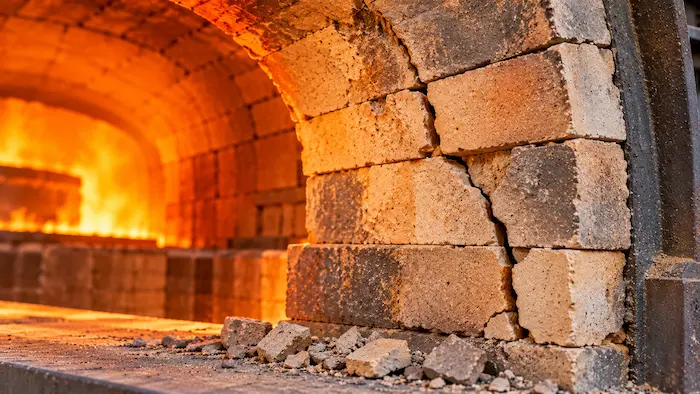
Refractory bricks can crack prematurely due to thermal shock, improper installation, unsuitable material selection, moisture, repeated temperature changes, chemical attack, or mechanical stress. However, cracking does not always mean that the bricks are defective. Even high-quality refractory materials can fail early when they are exposed to unsuitable operating conditions or installed incorrectly. Identifying the actual cause is essential to prevent further lining damage, reduce repair costs, and extend the service life of industrial furnaces.
Why Is Refractory Brick Cracking a Serious Problem?
Refractory bricks protect furnace walls and high-temperature equipment against heat, chemical reactions, mechanical stress, and contact with molten materials. When cracks develop, they may create pathways for heat, gases, or corrosive substances to penetrate the lining and damage its underlying layers.
Not every surface crack indicates critical failure. The level of risk depends on the crack’s depth, length, location, and rate of growth. For example, a small surface crack in a low-stress area may only require monitoring, while a deep crack in a zone exposed to molten materials or heavy mechanical loads requires immediate technical inspection.
7 Common Causes of Refractory Brick Cracking
1. Thermal Shock and Sudden Temperature Changes
Thermal shock is one of the most common causes of refractory brick cracking. When a brick is heated or cooled too quickly, different sections may expand or contract at different rates. This creates internal stress, which can cause cracks when it exceeds the material’s resistance.
For example, rapidly increasing furnace temperature during startup or cooling the furnace too quickly after high-temperature operation may damage the lining. Following a controlled heating and cooling schedule based on the refractory grade and furnace design helps reduce this risk.
2. Selecting the Wrong Refractory Brick
Not all refractory bricks are designed for the same furnace conditions. Alumina content, chemical composition, porosity, strength, thermal shock resistance, and high-temperature behavior are important properties that must be considered during material selection.
A brick suitable for a relatively stable thermal environment may not perform well in a zone exposed to severe temperature fluctuations, abrasion, or direct slag contact. Therefore, selecting refractory bricks based only on their maximum service temperature is not sufficient.
Explore our guide to High Alumina Refractory Materials and learn more about Refractory Products and Their Industrial Applications.
3. Improper Installation and Expansion Joint Design
Poor installation is another major cause of refractory brick cracking. If bricks are laid without the required joint spacing, the lining may not have enough room to accommodate thermal expansion. As the furnace heats up, excessive compressive stress can develop, leading to cracking or brick displacement.
Incorrect mortar selection, inconsistent joint thickness, uneven brick alignment, and improper arch construction can also concentrate stress in specific areas. Following installation drawings, technical specifications, and the manufacturer’s recommendations is essential for a reliable lining.
4. Residual Moisture and Improper Drying
Moisture trapped in refractory materials, mortar, or newly repaired sections can create problems during initial heating. When the temperature rises, remaining moisture turns into vapor. If vapor pressure builds up inside the material faster than it can escape, cracking, spalling, or partial lining failure may occur.
This risk is particularly important when using refractory mortar or castable materials during installation and repair. Proper curing and controlled drying procedures must be followed according to the product specifications, installation thickness, and furnace conditions.
5. Repeated Thermal Expansion and Contraction
Furnaces that frequently start and stop expose refractory bricks to repeated heating and cooling cycles. Over time, these cycles can create cumulative stress, extend existing cracks, and reduce the structural integrity of the lining.
To reduce this type of damage, operators should review furnace operating schedules, temperature change rates, and expansion joint design. Refractory bricks should also be selected according to the thermal cycling conditions of the application.
6. Chemical Attack from Slag and Corrosive Materials
In many industrial furnaces, slag, molten materials, vapors, and chemical compounds interact with refractory surfaces. These reactions can alter the brick structure, weaken its strength, and eventually contribute to cracking or erosion.
For example, using refractory bricks that are chemically incompatible with the process slag may accelerate lining corrosion. The slag composition, operating temperature, and refractory chemistry should therefore be evaluated together. In steelmaking furnaces, selecting bricks compatible with the actual slag conditions is particularly important. Read our guide to Refractory Bricks for Steelmaking.
7. Mechanical Stress and Poor Furnace Design
Excessive loading, equipment vibration, impact from incoming materials, and structural pressure can create stress within refractory bricks. If the lining design, support system, or brick arrangement is inadequate, stress may become concentrated in certain areas and cause cracking.
In these situations, replacing damaged bricks alone may not solve the problem. The underlying source of stress must also be identified and corrected to prevent cracks from reappearing in the same or nearby sections.
How to Prevent Refractory Bricks from Cracking
Preventing refractory brick cracking requires proper material selection, correct installation, and controlled furnace operation. The following practices can help reduce premature damage:
- Select refractory bricks according to actual operating temperature, chemical exposure, abrasion, and thermal shock conditions.
- Review technical specifications, including chemical composition, porosity, strength, and thermal properties before purchasing.
- Install bricks according to the approved design and maintain the required expansion joints.
- Use mortar and bonding materials compatible with the selected refractory bricks.
- Follow the manufacturer’s curing, drying, and initial heating instructions.
- Avoid unnecessary or sudden temperature changes during furnace startup and shutdown.
- Inspect the lining regularly and record cracks, spalling, and thickness changes.
Should Cracked Refractory Bricks Be Replaced?
The decision to repair or replace cracked refractory bricks depends on the severity and location of the damage. Minor surface cracks may sometimes be managed through regular monitoring. However, deep or expanding cracks, loose brick fragments, and damage in critical furnace zones require professional evaluation.
If cracking reduces lining strength, allows corrosive materials to penetrate, or increases heat transfer through the furnace wall, localized repair or brick replacement may be necessary. The final decision should consider the remaining lining thickness, the condition of the backup layers, and the actual operating conditions.
Replacing bricks without identifying the original cause may lead to repeated failures. A proper inspection should determine whether the problem comes from material selection, installation, furnace operation, or structural design.
Technical Consultation and Refractory Brick Supply from Azarshid Pars
Preventing premature refractory brick cracking starts with selecting materials that match the actual furnace conditions. Furnace type, operating temperature, slag composition, thermal cycling, and installation method all influence refractory performance.
Azarshid Pars supplies alumina-based and magnesia-based refractory materials and supports industrial buyers in selecting products according to their application requirements. Before requesting a quotation, prepare details such as furnace type, application zone, operating temperature, required brick dimensions, and process conditions. These details help make technical recommendations and product selection more accurate.
Contact Azarshid Pars for technical consultation and to purchase refractory bricks and materials suitable for your production line.
Phone: +98 913 251 9644
Conclusion
Refractory brick cracking can result from thermal shock, unsuitable material selection, improper installation, residual moisture, repeated temperature cycles, chemical attack, or mechanical stress. Preventing these problems requires application-specific material selection, correct installation and drying procedures, and regular inspection of the furnace lining.
If your refractory bricks crack earlier than expected, identify the root cause before purchasing replacement materials. This approach can help prevent repeated failures, reduce maintenance costs, and improve furnace reliability. For technical advice and refractory material purchasing, contact Azarshid Pars.