
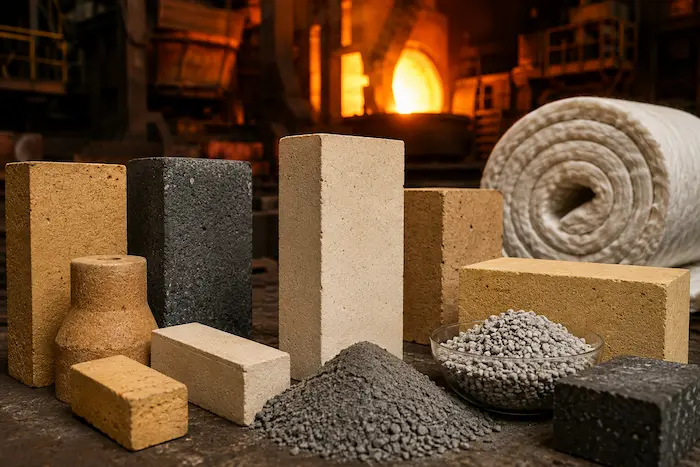
What Are Refractory Materials? A Guide to Choosing the Right Refractory for Industrial Furnaces
Refractory materials are specially engineered materials designed to withstand extremely high temperatures, molten metals, thermal shock, abrasion, and chemical attack inside industrial equipment. Choosing the right refractory is not simply a matter of selecting a material with a high temperature rating. Furnace type, operating temperature, slag chemistry, mechanical stress, thermal cycling, and installation conditions must all be considered to achieve a long service life and reduce maintenance costs.
Refractory materials play a critical role in industries such as steelmaking, foundries, cement, glass, ceramics, mining, and other high-temperature processes. A properly selected refractory lining protects furnace structures, reduces heat loss, supports stable production, and helps prevent unexpected shutdowns.
What Are Refractory Materials?
Refractory materials are heat-resistant materials that can maintain their physical and chemical properties when exposed to extremely high temperatures. They are used to protect the internal surfaces of furnaces, ladles, tundishes, kilns, reactors, and other industrial equipment from heat and aggressive operating conditions.
However, temperature resistance is only one part of refractory performance. A high-quality refractory material may also need to resist chemical corrosion, slag penetration, mechanical wear, molten metal attack, thermal shock, and repeated heating and cooling cycles.
Where Are Refractory Materials Used?
- Industrial furnaces
- Steelmaking furnaces
- Electric Arc Furnaces (EAF)
- Induction furnaces
- Steel ladles
- Tundish systems
- Reheating furnaces
- Cement kilns
- Foundry equipment
- Glass and ceramic furnaces
- Metal melting and heat-treatment equipment
Main Types of Industrial Refractory Materials
Refractories can be classified according to their chemical composition, physical form, and method of installation. Selecting the appropriate category depends on the operating conditions of the equipment.
High Alumina Refractory
High Alumina Refractory materials are primarily based on aluminum oxide (Al₂O₃). Increasing alumina content generally improves high-temperature performance and can provide excellent resistance to abrasion and chemical attack in demanding industrial applications.
High alumina refractories are widely used in steelmaking, foundries, industrial furnaces, heat-treatment equipment, and other high-temperature applications.
For a more detailed technical discussion, see our article on High Alumina Refractory.
High Alumina Refractory Bricks
High Alumina Refractory Bricks are pre-shaped refractory products used to construct or repair furnace linings. Their performance depends on factors such as alumina content, apparent porosity, bulk density, mechanical strength, thermal shock resistance, and service temperature.
High alumina bricks can be used in different sections of industrial furnaces where resistance to high temperature, abrasion, and chemical attack is required.
Castable Refractory
Castable Refractory is a monolithic refractory material that is installed by mixing and placing the material directly at the required location. Unlike refractory bricks, castables can form a continuous lining without conventional brick joints.
Castable refractories are commonly used for furnace linings, repairs, burner areas, kiln components, and various industrial structures exposed to high temperatures.
The correct castable should be selected according to temperature, chemical exposure, mechanical stress, installation method, curing requirements, and dry-out conditions.
For more information, read our guide to Castable Refractory.
Dry Ramming Mass
Dry Ramming Mass is a dry refractory material commonly used for monolithic linings, particularly in induction furnaces. After proper installation and sintering, it can create a dense refractory lining capable of withstanding high temperatures, thermal cycling, abrasion, and contact with molten metal.
Particle size distribution, raw material quality, installation technique, compaction, and furnace start-up procedures can significantly affect the service life of a dry ramming lining.
Learn more about this material in our article about Dry Ramming Mass.
Why Are Refractory Materials Important in Steelmaking?
Steelmaking is one of the most demanding applications for refractory materials. Steel plants operate with molten metal, extreme temperatures, aggressive slags, mechanical impact, and repeated thermal cycles.
Refractory materials are used throughout the steelmaking process, including furnaces, ladles, tundishes, runners, transfer systems, and continuous casting equipment. Each application has different requirements, so using the same refractory product throughout a steel plant is rarely the best approach.
Tundish Refractories in Steelmaking
A tundish plays an important role in continuous casting by receiving and distributing molten steel before it enters the casting molds. Its refractory lining must withstand high temperatures, molten steel contact, slag attack, thermal shock, and chemical corrosion.
The correct tundish refractory solution depends on the steel grade, operating temperature, casting duration, slag conditions, and lining design.
For more information, see our guide to Tundish Steelmaking and Refractory Materials.
How to Choose the Right Refractory Material for an Industrial Furnace
Selecting the correct refractory is one of the most important decisions when designing, repairing, or upgrading an industrial furnace. A technically suitable product should be selected based on the actual operating environment rather than price alone.
1. Operating Temperature
The first consideration is the actual operating temperature of the furnace. However, maximum temperature alone is not enough. The duration of exposure and the frequency of temperature changes can also have a major impact on refractory performance.
2. Furnace Type and Application
Different furnace designs require different refractory solutions. An induction furnace, for example, may require a specialized dry ramming mass, while a steelmaking furnace may require magnesia-based or high alumina products in different zones.
3. Chemical Environment
Molten metal, slag, gases, and process chemicals can react with refractory materials. Chemical compatibility is therefore essential. A refractory that performs well in one process may experience rapid corrosion in another environment.
4. Slag Chemistry
Slag chemistry is particularly important in steelmaking. The interaction between slag and refractory can cause corrosion, penetration, cracking, and material loss. The refractory composition should therefore be compatible with the expected slag conditions.
5. Thermal Shock
Repeated heating and cooling cause expansion and contraction within the refractory lining. If the material cannot withstand these thermal stresses, cracks may develop and reduce the service life of the lining.
6. Mechanical Wear
Some refractory linings are exposed to abrasion, impact, vibration, or molten material flow. In these applications, mechanical strength and abrasion resistance are just as important as temperature resistance.
7. Installation Method
The installation method must also be considered before selecting a refractory product. Bricks, castables, ramming materials, and other monolithic refractories require different installation procedures.
Even a high-quality refractory product can fail prematurely if it is installed incorrectly, insufficiently compacted, or improperly dried and heated during commissioning.
Is the Cheapest Refractory Material the Best Choice?
Not necessarily. The purchase price is only one part of the total cost of a refractory lining. Industrial customers should consider the total lifecycle cost, including installation, maintenance, replacement frequency, energy consumption, and production downtime.
For example, a lower-priced refractory may initially appear economical but could require more frequent replacement. If every replacement causes several hours or days of production downtime, the actual cost can become significantly higher than the original purchase price.
In many cases, investing in a higher-performance refractory with a longer service life can reduce the overall operating cost of the furnace.
Common Mistakes When Buying Refractory Products
- Choosing refractory materials based only on price
- Ignoring actual furnace operating conditions
- Failing to consider slag chemistry
- Using the same refractory material in every furnace zone
- Ignoring thermal cycling
- Choosing products without reviewing technical specifications
- Neglecting installation and dry-out procedures
- Purchasing without technical consultation
These mistakes can lead to premature lining failure, increased maintenance costs, unplanned shutdowns, and reduced furnace productivity.
Important Technical Properties of Refractory Materials
Before purchasing a refractory product, its technical specifications should be compared with the actual requirements of the application. Depending on the refractory type, important properties may include:
- Alumina (Al₂O₃) content
- Magnesia (MgO) content
- Refractoriness
- Bulk density
- Apparent porosity
- Cold crushing strength
- Thermal shock resistance
- Abrasion resistance
- Chemical corrosion resistance
- Maximum recommended service temperature
It is important to understand that a higher value for one technical property does not automatically mean that a product is better for every application. The most suitable refractory is the one whose overall properties match the actual operating conditions.
Why Technical Consultation Matters Before Buying Refractories
Choosing refractory materials for an industrial furnace often requires evaluating several technical variables at the same time. Before placing an order, industrial buyers should provide information such as furnace type, capacity, operating temperature, heating method, processed material, slag characteristics, lining thickness, installation method, and previous refractory failure history.
This information allows a refractory manufacturer or technical supplier to recommend a solution that is better suited to the actual application.
In many industrial projects, proper technical selection can save considerably more money over the lifetime of a furnace than simply choosing the lowest purchase price.
Azarshid Pars Refractory Products
Azarshid Pars Refractory Products operates in the field of refractory products and solutions for high-temperature industrial applications. The company focuses on alumina- and silica-based refractory products and provides technical guidance to industrial customers looking for suitable refractory solutions.
For applications involving industrial furnaces, steelmaking equipment, tundishes, and other high-temperature systems, evaluating the actual operating conditions before purchasing can help prevent premature refractory failure and unnecessary replacement costs.
When Should You Contact Azarshid Pars?
If you are uncertain whether you need High Alumina Refractory, High Alumina Bricks, Castable Refractory, Dry Ramming Mass, or another refractory solution, it is better to review your application before purchasing.
Providing information about your furnace and operating conditions can help the technical team identify a more appropriate refractory solution for your application.
+98 913 251 9644
Conclusion: How to Select the Right Refractory Material
Choosing the best refractory material for an industrial furnace requires more than checking its maximum temperature rating. Furnace type, operating temperature, slag chemistry, thermal shock, mechanical wear, installation method, and expected service life should all be considered.
For example, High Alumina Refractory may be an excellent choice for one furnace zone, while Dry Ramming Mass may be more appropriate for an induction furnace. In another application, Castable Refractory may provide the most practical solution for creating or repairing a monolithic lining.
The right refractory selection can extend lining life, reduce maintenance requirements, minimize production downtime, and improve the overall economics of an industrial furnace.
Get Expert Refractory Consultation from Azarshid Pars
If you are looking for refractory materials, high alumina refractory bricks, castable refractory, dry ramming mass, or other industrial refractory products, Azarshid Pars can help you evaluate your application and identify a suitable solution.
For technical consultation, product selection, and purchasing information, contact Azarshid Pars Refractory Products:
+98 913 251 9644
Related Refractory Articles
- Refractory for Induction Furnaces
- Tundish Steelmaking
- What Is Refractory Lining?
- How to Choose a Reliable Alumina Refractory Supplier
Frequently Asked Questions About Refractory Materials
What are refractory materials?
Refractory materials are specially engineered materials designed to withstand high temperatures, thermal shock, chemical attack, abrasion, and contact with molten materials. They are widely used in industrial furnaces and other high-temperature equipment.
What is the best refractory material for an industrial furnace?
There is no single refractory material that is ideal for every furnace. The appropriate material depends on furnace type, operating temperature, slag chemistry, mechanical conditions, thermal cycling, and the specific application.
What is the difference between refractory brick and castable refractory?
Refractory bricks are pre-shaped products installed as individual units, while castable refractories are monolithic materials mixed and installed directly at the application site. The appropriate option depends on furnace design, installation requirements, and operating conditions.
Are high alumina refractories suitable for steelmaking?
High alumina refractories can be suitable for several steelmaking applications because of their high-temperature performance, strength, and resistance to abrasion. However, the exact product should be selected according to the specific operating environment and chemical conditions.
How can refractory lining life be increased?
Proper material selection, professional installation, correct curing and dry-out procedures, controlled furnace operation, and regular inspection can all contribute to longer refractory lining service life.
Why is refractory technical consultation important?
Refractory performance depends on the interaction between the material and the actual operating environment. Technical consultation helps ensure that the selected product is compatible with furnace temperature, slag chemistry, mechanical stress, and installation conditions.